
publications
preprints
posts
- 2026-07-13 ASP-completeness
- 2026-06-17 23
- 2026-01-22 Nash-Williams Proof Golf
notes
2026-08-11
Here
Be warned that the Wikipedia page on recursion will prohibit you from adding it to its own See also section. See here for too much more detail. (And see here also, of course.)
2026-07-26
Iff
If and only if <-> iff
when and only when <-> whenn
where and only where <-> wherre
withh
withoutt
unlessss
despitte
thereforre
becausse
whencce
thenn
forr
afterr
beforre
whille
sincce
byy
2026-07-16
Boxes
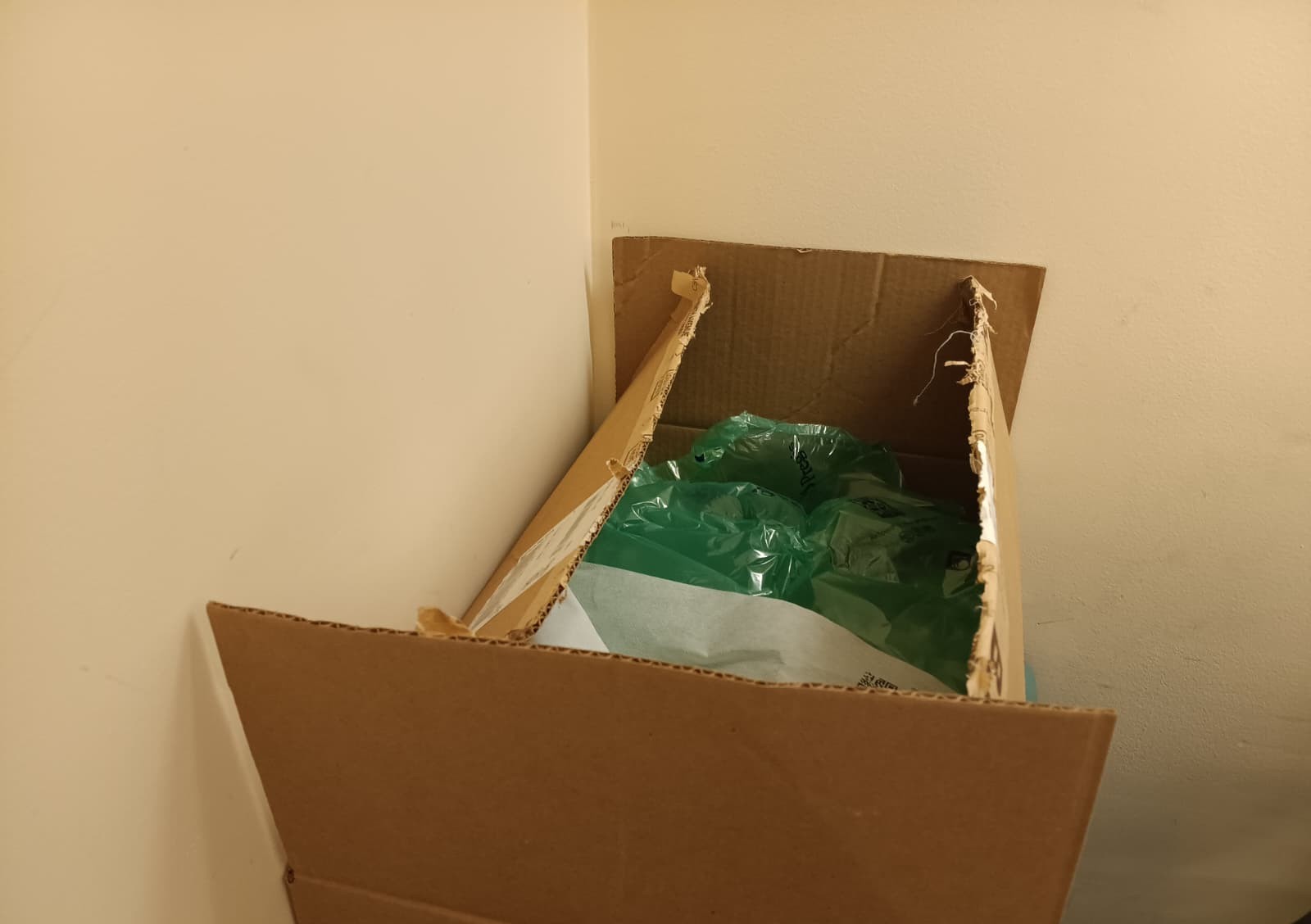
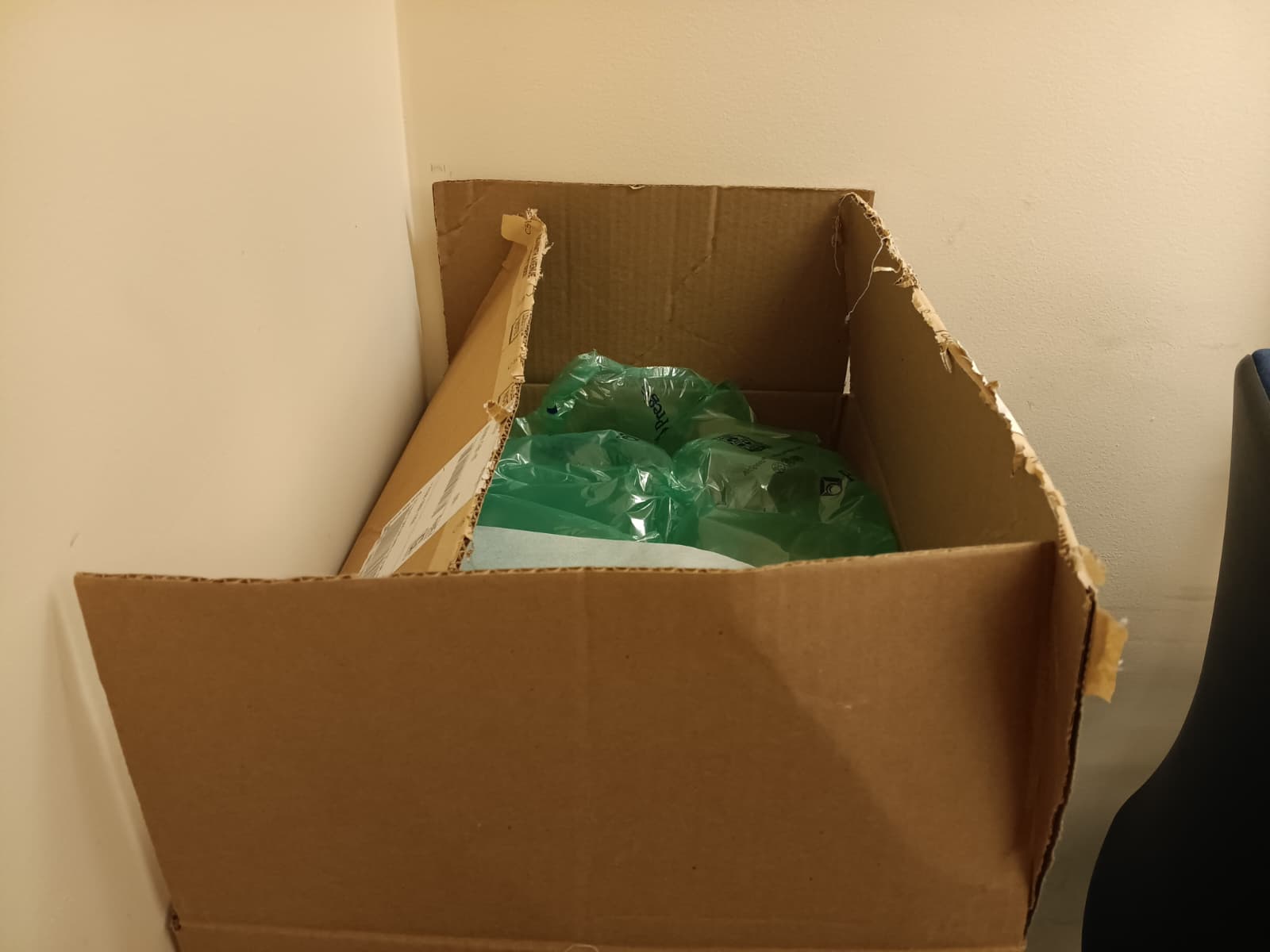
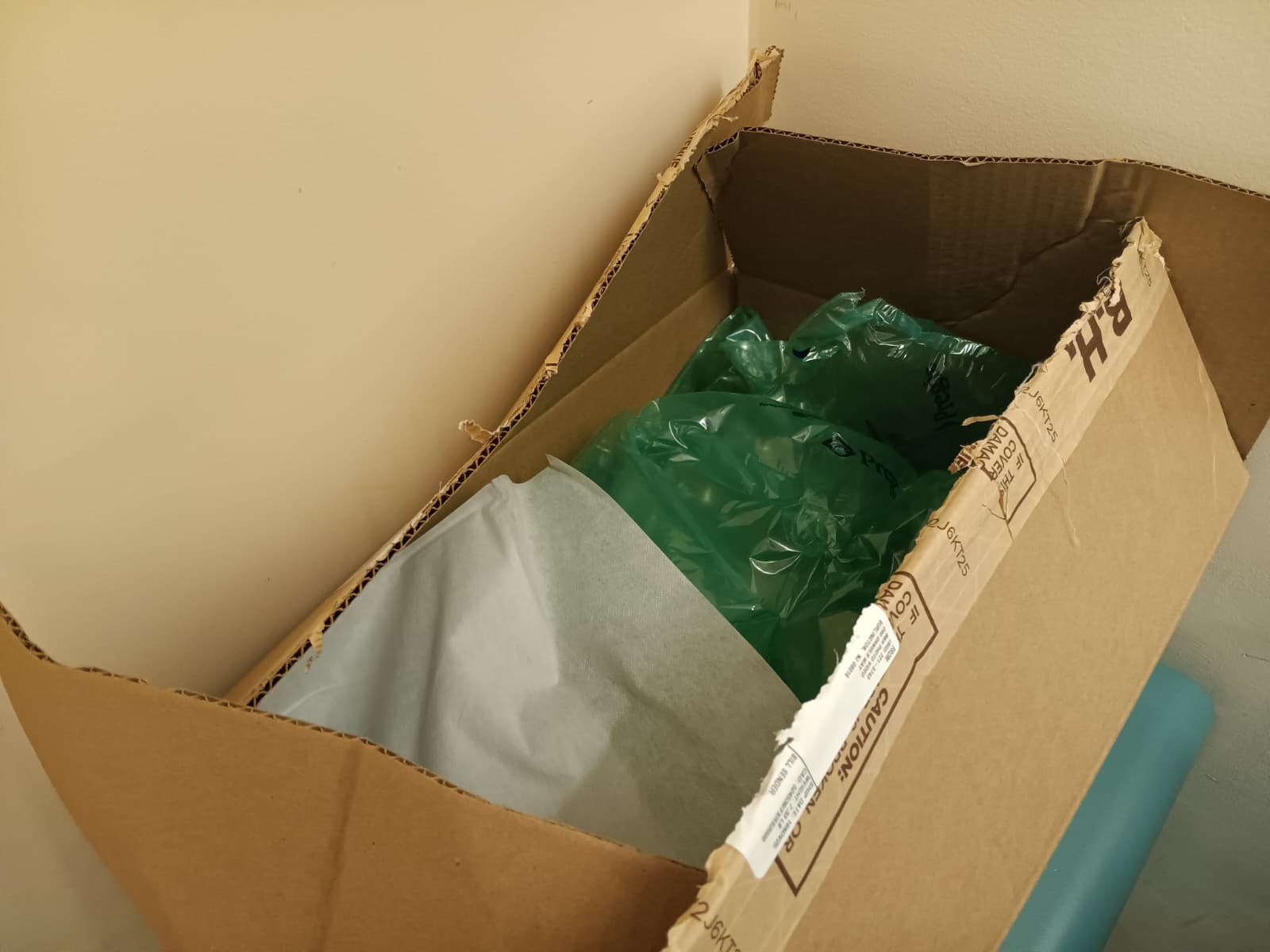
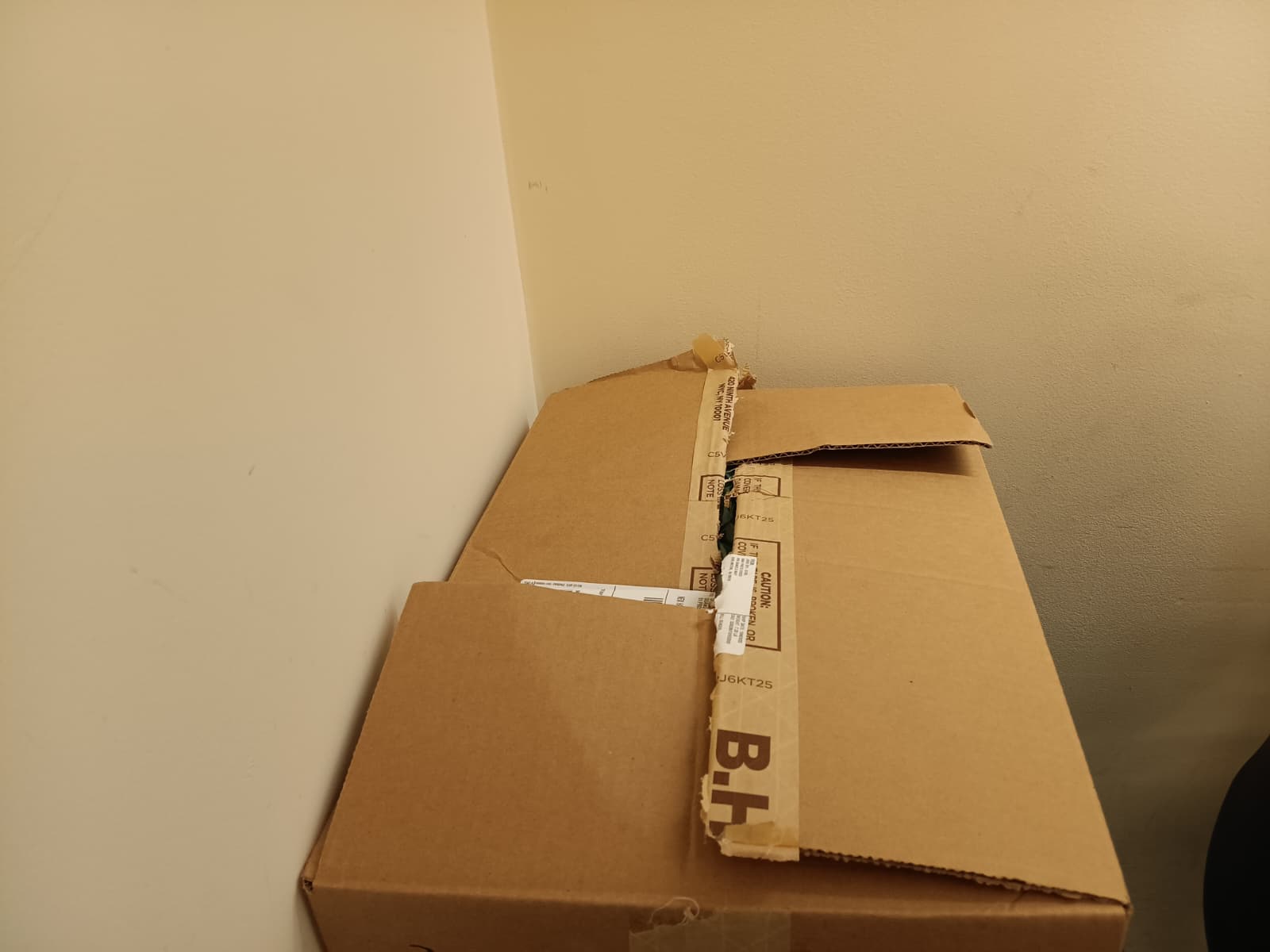
To close cardboard boxes without tape, other equipment, etc., try this neat trick.
 →
→
 →
→
 →
→
Start with the flaps up (1). Choose a corner and an orientation — e.g., bottom-left and CCW. Of the two flaps meeting at that corner, take the one ordered first in your orientation and push it inward; it should rest comfortably inside the next flap over, e.g. if going CCW, the bottom flap’s top-right bit should rest a little inside the bottom of the right flap (2).
Repeat for the other three corners (3).
Push all four corners down at the same time (4), at each corner using the outer edge (right edge if CCW, left edge if CW) to push its partner down. This step takes at least two hands and will probably incur some bending.
Now you can perturb the box, turn it upside-down, really go crazy, etc., with no adverse consequences. Enjoy.
2026-07-14
$\text{ASP}$-completeness
MIT Hardness Group 2024 cite Yato and Seta 2003 for $\text{ASP}$-completeness. It turns out $\text{ASP}$, and $\text{ASP}$-completeness although without the name, was first defined in Ueda and Nagao 1996. The paper was available only as a postscript file, so I converted it to PDF, attached here for posterity and the common welfare.
I put some definitions about $\text{ASP}$ in this post.
2026-07-12
Eytzinger
Five months ago, almost to the day, I was reading (once again) about BFS-traversal order for BSTs (aka level-order, heap, and implicit BST layout). I had seen this in an early data structures class and not thought much of it, but it snuck up on me. At some point I was thinking about database index structures and cache-friendly searching, and after coming up with a couple of other ideas to benchmark, I had a gander through Gemini’s literature review, which pointed out this great blog post. Being a busy person with no time to waste, or maybe a pizza on the way, I skipped to the implementation and results, added a version of the layout to my inchoate benchmark, and moved on, noticing peripherally that this was the same as the BFS layout. The next day I opened the Khuong and Morin paper referenced by the post and checked out some of the results more closely, again skipping any preamble — these benchmarks (Claude agents) weren’t going to run themselves. My benchmarks more or less replicated the results in the paper, but I was curious where “Eytzinger” came from — I couldn’t find the name anywhere else.
Interestingly, it looks as if this paper is the first to attribute this layout to Michaël Eytzinger, who in 1590 described a nice method for writing out family trees (which tend to be binary) linearly, he too being a busy person, with no time to figure out how to print family-tree graphs, which outgrow the page quickly anyway. This also makes Eytzinger’s “Thesaurus principum hac aetate in Europa viventium” the oldest cited work in any CS paper I can find, appearing as [6] in the Khuong–Morin paper; see also the Wikipedia article.
(For the other close contenders — Leibniz citing Fuxi (“Fohy”), Pāṇini’s anticipation of BNF (apparently also known nowadays as PNF) by 2400 ± 100 years, references to Euclid plus a bunch of 19th-century French math papers — I wouldn’t call them “citations in CS papers”, although they’re good suggestions for anyone who wants to beat the record.)